Googling Symptoms: Why do we even do it?
It's like scratching a mosquito bite or checking your bank account when you're broke—you know it'll make things worse, yet you can't help yourself.
2/22/202611 min read
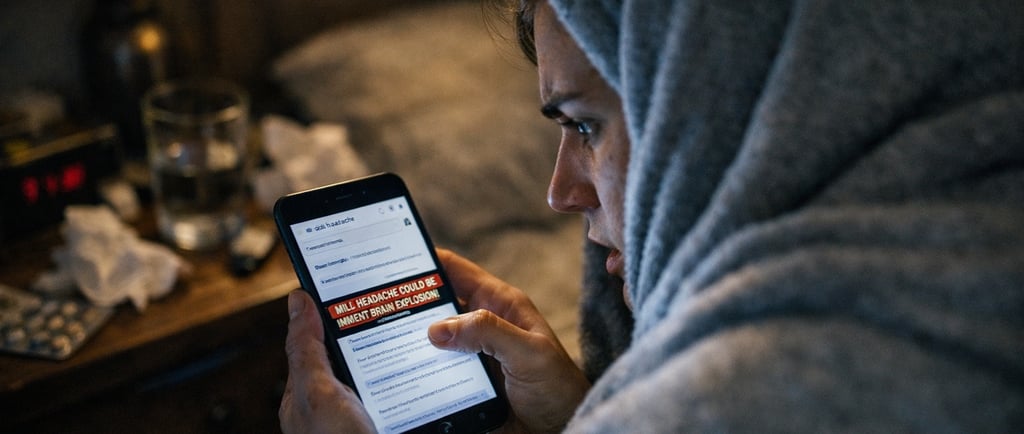
Why Do We Google Our Symptoms?
The short answer? Curiosity.
But if you're Googling symptoms at 3 AM for the third time this week, there's something deeper going on.
Undoubtedly, anxiety is the main culprit here, though it might not be working alone. I'll talk about the other potential mental conditions that may be contributing to this unwanted pattern in a future post. But in its purest form, you want to know what's happening and take control.
Anxiety, in its shortest definition, is "fear or apprehension about what's to come" (Healthline). You want to know what the problem is, and the urge is so strong that you take charge and try to turn the unknown danger into a known danger - on your own terms.
For our ancestors on the African savannah, uncertainty was deadly. That rustling in the grass? Could be wind. Could be a predator. Our ancestors who investigated, who turned unknown threats into known threats, were the ones who survived. The anxious humans who felt compelled to understand and control their environment lived long enough to pass on their genes. We are their descendants.
Your brain is doing what it was designed to do: detect danger, gather information, and take action. The problem is, your body's vague symptoms aren't a lion in the grass - but your ancient threat-detection system doesn't know that. So you do what your ancestors did: you investigate. You seek answers. You try to turn "something's wrong" into "I know exactly what's wrong".
Taking control feels better than waiting in uncertainty. And for a moment, it works - until the anxiety returns and the cycle begins again.
So why do you take charge on your own instead of asking for professional help? Several reasons:
You need an immediate answer to calm your heightened anxiety. Calling a hospital, booking an appointment, waiting for the doctor to see you - all of this takes time. Your anxiety cannot wait that long.
You might fear social judgment, especially if you visit medical practitioners frequently. Deep down, you know you've been here before. Multiple times. This month. And you're pretty sure the receptionist now recognizes your voice when you call. There's only so many times you can show up convinced you have a rare disease before you start getting that look.
You don't trust the judgment of medical practitioners. This is especially true for people with severe health anxiety and some older adults. Their past experiences - right or wrong - have taught them that medical practitioners can sometimes come across as dismissive. Your whole world is falling apart (!) and they seem to be calm about it! Outrageous!
You may not have the financial means to visit a medical practitioner. In some countries like the UAE, you can walk in and get a full-body MRI as long as you pay the fee. But in countries like the US and UK, you need a medical referral for most tests - which means paying for an appointment just to ask for another appointment. When your anxiety-driven symptoms probably won't be covered by insurance (spoiler: they won't be), those fees add up fast.
This list is definitely not exhaustive, but it leads to the inevitable result:
Google: The Double-Edged Sword
Google is an integral part of our daily lives now. We use it for everything - from looking for the best restaurants in the neighbourhood to booking our plane tickets, from scheduling our appointments to settling random curiosities.
Whenever we need information, whether it's for our primary school homework or an academic document for our PhD thesis, Google is there for us. If we assume for a second that the "knowledge is the most powerful weapon" cliché is true, then Google is like the Death Star**.
Besides:
Google is open 24/7, never puts you on hold, and doesn't make you sit in a waiting room next to someone who's "probably just allergic to something".
Also Dr. Google never dismisses concerns with "it's probably just stress". WebMD might tell you that you have everything from a common cold to a rare neurological disorder, but at least it takes you seriously.
Google knows everything. Doctor might be competent or not, he might dismiss some important clues, but Google is not like that, Google is different.
Google is free!
So while we have all these advantages, why is Googling your symptoms not a great idea? I've tried to list some of the reasons below. I hope they make sense to you as much as they make sense to me now.
Indisputably, Google provides a vast array of information about any subject you need. It gives us powers so great that even Spiderman would be jealous. However, are you able to assess this information correctly? How do you verify the accuracy of what you read online?
Let's take a look.
The Three Main Sources
When you Google your symptoms, there are three primary sources you get information from:
Medical diagnosis sites such as WebMD, Healthline, etc., where you search for your symptoms and get answers.
News sources like newspapers and magazines that gather health articles from time to time. People generally do not search their conditions from this source. but news sources leave scars. I will explain what I mean.
Health Forums and comments that people leave on the internet.
I will not be covering AI under this article, as it deserves a whole different post.
The Problem with Medical Sites
The first group consists of sites created by people who are either doctors or somewhat related to the medical sector. While the intention of these sites is good (especially for reading educational articles), there are several problems with their approach.
When you search for an extremely common symptom like headache (according to the World Health Organisation, literally 100% of people have a headache at some point in their life, and some have them daily), these sites give you a shopping list of 50+ possible problems. These range from a pimple on the forehead to a rare brain tumour that will likely kill you in several months.
Why do they do that? Of course, they don't want to make you uncomfortable, and they're not pure evil. They do it for two main reasons:
The conditions listed may genuinely cause headaches, just like a gazillion other conditions. They inform you about it - it's that simple. Ultimately, you are the one picking your illness (and generally the scariest one) among the list they provide, not them.
They have to list even the most extreme ones to avoid legal prosecution if the person reading it has an unlikely serious condition and doesn't visit a doctor by relying on the information provided on their website. (That's why they always advise you to visit a medical practitioner, and so do I.)
So here's the million-dollar question: while even the doctor you visit asks for several tests before diagnosing a condition, how do you expect WebMD to diagnose you over your computer screen?
The Problem with News Sources
The second source of information comprises newspapers and magazines - both online and print. You know the ones: "Woman's Headache Turns Out to Be Rare Brain-Eating Amoeba" or "Father of Three Dismissed Symptoms for Months. What Doctors Found Will Shock You."
Here's the thing: you're probably not reading these articles to diagnose yourself. You're just scrolling through your news feed, minding your own business, when suddenly you're reading about a 32-year-old who thought they had indigestion but actually had Stage 4 pancreatic cancer. Especially if you follow accounts like Ladbible, they looove these types of stories.
And now that story lives in your brain. Rent-free. Forever.
This is the real danger of health news - they create scars. Not physical ones, but mental ones that resurface every time you have a symptom that's even remotely similar. Got a headache? Your brain helpfully reminds you of that article about the brain tumour that started as "just migraines" Feeling tired? Remember that story about the person who ignored their fatigue until it was too late?
If you're an empathetic person, it's even worse. You don't just read these stories - you put yourself in them. You imagine being that person in the waiting room, getting that diagnosis, making those phone calls to loved ones. Your brain runs the full disaster movie, starring you.
The result? You accumulate a mental library of medical horror stories that have absolutely nothing to do with you but feel deeply personal. It's like collecting trauma you didn't experience, just in case you might need to worry about it later.
The problems with these sources:
They're optimized for clicks, not calm. "Man's Mild Cough Was Actually Nothing Serious and He Was Fine" doesn't get published. "Man's Mild Cough Was A Warning Sign He Ignored" does. News outlets know that fear sells, and health anxiety is a 24/7 renewable resource.
They cherry-pick the rare and terrifying. That one-in-a-million case makes for a compelling story. The 999,999 people who had the same symptom and were perfectly fine? Not newsworthy. But your anxious brain doesn't care about statistics - it cares about that one person it could be you.
The information isn't tailored to you, but your brain makes it feel like it is. That article about a 45-year-old woman's health scare? Doesn't matter that you're a 28-year-old man - if you share even one symptom, your brain goes "close enough!" and files it under "Things To Panic About."
They create a distorted sense of medical reality. After reading enough health news, you start to believe that common symptoms are rarely benign. In reality, the overwhelming majority of headaches are just headaches, not brain tumours. But good luck convincing your anxiety of that at 3 AM after you've spent years absorbing these stories).
The Problem with Health Forums
And the last one is my favourite: forum sites and random comments.
Think about restaurant reviews for a second. Even Michelin-starred restaurants have one-star reviews from someone who didn't like the way the fork looked at them. The people who had a perfectly fine meal? They're not online writing "Food was good, no complaints, 5/5." They're living their lives. It's the disappointed and angry customers who take to the internet, because they paid hard-earned money and their (often unreasonably high) expectations weren't met.
The same principle applies to health forums.
You rarely find someone writing: "I had a terrible headache last night, but it was probably the bottle of wine I drank. Thank God I feel fine today." Or: "I had severe menstrual cramps for two days, but now they're gone." If it's gone, it's gone - no need for a second opinion.
Even better, anxious people post about symptoms eerily similar to yours, mention they've booked a doctor's appointment, and then... vanish. No follow-up. No closure. Other anxious readers desperately ask "What did the doctor say??" but get only silence.
To the person who posted? They saw the doctor, got reassurance, and moved on with their life. Their anxiety subsided, so they had no reason to return.
But to you, the anxious reader, their silence means something sinister. They had an obligation as a fellow symptom sleuth to report back. Why didn't they? Maybe they dies, or got such a terrible news that they no longer care to report back. Why else would they leave things in suspense?
Meanwhile, the people who do stay on these forums? They're the chronically anxious. Many have good intentions and genuinely want to help. The problem: they're trying to diagnose themselves and you. They're so focused on their own fears that they project them onto your situation.
And let's be honest - it's already difficult to put symptoms into words, especially uncommon ones. Take heart palpitations: some describe it as fluttering, others as thumping or flip-flopping. Even doctors who've seen thousands of cases struggle to interpret descriptions (especially if they've never experienced it themselves). How do you expect someone on the internet to diagnose your condition when the only condition they've actually seen is their own?
Here's the irony: Most people who regularly read and write on these forums share one common condition - health anxiety itself - but they don't realize it. The source of their problem often isn't physical at all, yet they continue obsessing over physical symptoms. It's an echo chamber where the anxious diagnose the anxious, and everyone leaves more worried than when they arrived.
Who Should Google Their Symptoms?
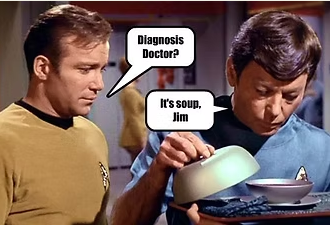



"Let there be Google"
Apparently, Jules will not leave a good review.
If you're looking for information about common symptoms such as a cold or flu (you know: headache, fever, runny nose, general fatigue), then you higher chances of getting a meaningful result from your search. (Though you should still probably seek medical advice)
Even with these simple symptoms, you may still diagnose yourself with meningitis if you search thoroughly enough. However, simple questions about how to use over the counter medicines (like ibuprofen or paracetamol) would probably lead to useful results.
But if you have even a little bit of anxiety-related issues (and honestly, who doesn't?), you may find yourself drifting towards the most life-threatening and unlikely result - the one that means total obliteration. There's a simple evolutionary reason behind why some people focus on worst-case scenarios, which I'll explore in another post. The short version: Some people are control freaks who want to prepare themselves for the worst so they can survive longer.
So What's the Alternative?
Here's the truth: the problem isn't the symptom you're Googling. It's the anxiety driving you to Google it in the first place.
Your racing heart at 3 AM isn't killing you. Your anxiety about your racing heart is what's making it race faster. And Googling "racing heart sudden death" isn't going to slow it down - it's gasoline on a fire.
Understanding how anxiety works, why it amplifies every sensation, and when something actually warrants medical attention versus when you just need to breathe - that's what helps. Not another search that ends with you convinced you have a disease you can't pronounce.
So what can you actually do?
If you have a genuine new symptom that's severe, persistent, or concerning - see a doctor. I know, I know - I just spent this entire article explaining why you don't. But here's the thing: getting one professional opinion that says "you're fine" is infinitely more valuable than collecting 47 internet opinions that say "it could be anything from gas to pancreatic cancer."
For everything else - the chronic Googling, the 3 AM spiral, the catastrophizing - that's anxiety. And anxiety needs different tools:
Learn to recognize when your anxiety brain is in the driver's seat (hint: it's the one screaming that a headache is definitely a brain tumor)
Practice techniques that actually calm your nervous system - I will talk about these techniques, but labelling the anxiety ("this is now anxiety speaking in my mind"), breathing techniques and constructive questions (for example "have I felt this feeling before?" and "can this feeling have a more reasonable explanation?") work better than reassurance-seeking
Understand that anxiety lies. It tells you that feeling something strongly means it must be true. It's not.
The goal isn't to never worry about your health. The goal is to stop letting anxiety hijack every bodily sensation and turn it into a medical emergency.
That's what this site is about. Not diagnosing your symptoms, but helping you understand the anxious mind that makes you search for them - and giving you actual tools to break the cycle instead of spinning in it.
Your body is probably fine. Your anxiety just needs better management than Google can provide.
Image credits: Kayan woman with neck rings — author unknown / Wikimedia Commons, Free Content Licence. Pulp Fiction still © 1994 Miramax Films, used here for illustrative and commentary purposes. Star Trek: The Original Series still © Paramount Pictures/CBS Studios, used here for illustrative and commentary purposes.


Anna was recently having neck aches and now looks for potential causes online.
Thanks Captain Obvious!
Stay
Join the MyWeirdSymptoms community to stay in touch!
Subscribe to My newsletter
© 2025. All rights reserved.
Disclaimer
The content on My Weird Symptoms is for informational and entertainment purposes only. Nothing on this site is intended to be, or should be taken as, medical advice, diagnosis, or treatment. All opinions expressed here are the author's own and are based on personal experiences, research, and humour — not professional medical training.
Always seek the guidance of a qualified healthcare professional with any questions you may have regarding your health or a medical condition. Never disregard professional medical advice or delay seeking it because of something you've read here. If you think you may be experiencing a medical emergency, call your doctor or emergency services immediately.
Copyright & Fair Use
My Weird Symptoms occasionally uses images, graphics, or short clips from third-party media (such as TV shows, movies, and books) for purposes of commentary, criticism, humour, education, or parody. These materials remain the property of their respective copyright holders. We make no claim of ownership and do not intend to infringe on any copyrights.
Such use is intended to fall under fair use (17 U.S.C. § 107) as commentary, criticism, or parody. We use only small portions necessary to illustrate our commentary and always provide proper attribution where possible. If you are a copyright holder and believe any content should be removed, please contact us, and we will address it promptly.
Accuracy & Liability
While we strive for accuracy, information on this site may become outdated or contain errors. We make no guarantees about the completeness, reliability, or accuracy of information presented. Any action you take based on information from this site is strictly at your own risk.